
How Do You Fill Out the 2027-28 FAFSA? What Changed and 7 Mistakes to Avoid
Need help figuring out the right college path for your teen?
Take College Ready’s free 2-minute: https://collegereadyplan.com/?utm_source=twpp_podcast&utm_medium=referral&utm_campaign=oct2026&utm_content=show_notes
to discover your student’s next steps.
How do you fill out the 2027-28 FAFSA? Here’s the answer in under a minute.
Go to StudentAid.gov.
Your student creates an account, and each parent who needs to contribute creates their own account. Pull out your 2025 federal tax return because the 2027-28 FAFSA uses your 2025 income.
Your student starts the form, invites you as a contributor by email, text, or code, and you each complete your sections. List up to 20 colleges and submit.
The form opened September 23, 2026, the earliest launch in its history. Most families finish in about 15 minutes, and you see your results in real time.
And file now, not in March. Now.
Some state and college money is awarded on a first-come, first-served basis, and families who file in October get the first look.
That’s the answer.
For the next 25 minutes, I’ll show you what changed this year, what to have on your desk before you start, and the seven mistakes I see smart families make every single fall.
Welcome to Parents: Is Your Teen College Ready?
I’m Shellee Howard, the founder and owner of College Ready. For 18 successful years, I’ve helped families plan for college with a strategy instead of a guess. We’ve worked with more than 2,700 families, and I am a mom of four.
Today is a solo episode, and it’s the one I wish every parent of every senior would hear this month.
Why Filing in October Pays Off
Here’s why October matters so much.
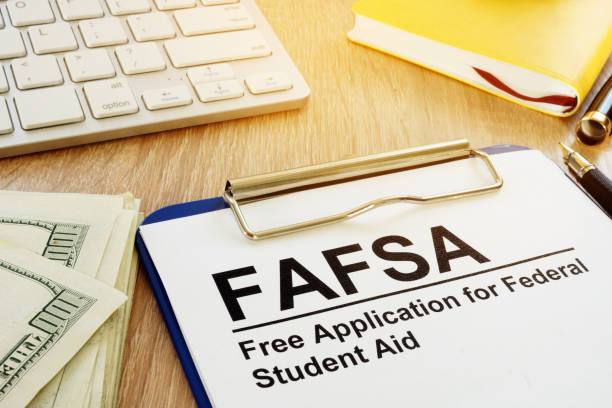
The FAFSA is the Free Application for Federal Student Aid. Colleges use it to award federal grants, work-study, and federal loans. Many states use it for state grants, and a lot of colleges use it for their own need-based money.
The federal deadline for the 2027-28 form is June 30, 2028.
Hear that date and relax?
Please don’t. Your state and your colleges set their own deadlines, and those come much sooner.
Some states award grant money until the money runs out. Some colleges set priority deadlines in November, December, or February, and the families who meet those deadlines get first pick of the institutional dollars.
So the federal deadline tells you when the door closes. It tells you nothing about when the best money is gone. There’s a second reason to file early.
If your student is applying Early Decision or Early Action this fall, many of those schools want financial aid forms submitted by November 1 or November 15. Your aid package arrives with the admission decision in December. File late, and your student might get a yes from the school of their dreams with no financial aid offer attached.
That’s a hard week. Let’s avoid that.
If you take one action after this episode, make it this: Block 45 minutes on your calendar this week. Sit down with your student and get it done.

What Changed on the 2027-28 FAFSA
Let’s talk about what’s new because a few of these changes affect real dollars for real families.
Change 1: The Form Is Faster
The Department of Education rewrote the questions in plainer language.
Most families finish in about 15 minutes, and instead of waiting one to three days for results, you see them in real time.
When you hit submit, you’ll see an estimate of your Student Aid Index right away.
Change 2: The Parent Invitation Is Easier
Your student invites you as a contributor by text, email, or a simple code.
No more hunting for a missing link in a spam folder.
Change 3: Returning Students Get Pre-Filled Data
If you have an older child already in college, the Department of Education is rolling out a feature this fall that pulls in data from last year’s form.
Watch for it. It saves you time on the renewal.
Now, let’s talk about the bigger changes.
These came from federal legislation passed in 2025 and took effect July 1, 2026. This is the first full FAFSA season where families feel it.
Change 4: Family Businesses and Farms
If you own a family business with fewer than 100 full-time employees, a family farm, or a commercial fishing operation, the net worth of that business is excluded from your assets on the FAFSA.
It will not count.
For business owners, this is fantastic news.
In past years, a family with a small manufacturing shop or a landscaping company might see their aid shrink because of business value they couldn’t spend on tuition.
Now that value stays off the form.
Change 5: Pell Grant Rules
The Pell Grant is free federal money for students with financial need.
Under the new rules, a student whose Student Aid Index is at least twice the maximum Pell Grant is not eligible for Pell.
With the maximum Pell Grant at $7,395, that line sits around $14,790.
Also new: If a student’s other grants and scholarships already cover the full cost of attendance, Pell goes away for that year.
Why do I tell you this?
Because I want you to read your aid offer with clear eyes.
If your SAI lands above that line, plan around state money, college money, and scholarships instead of Pell.
Change 6: Parent PLUS Loans
And this one gets my full attention.
Parent PLUS is the federal loan parents take out for a student’s education.
For years, parents could borrow up to the full cost of attendance.
Not anymore.
For new borrowers since July 1, 2026, Parent PLUS is capped at $20,000 per student per year and $65,000 total per student.
Do the math on four years.
$20,000 times four is $80,000. The cap is $65,000.
So a parent who borrows the maximum each year hits the ceiling before senior year.
And there’s more.
Parent PLUS loans taken out after July 1, 2026, go into a new tiered standard repayment plan. They don’t qualify for income-driven repayment or Public Service Loan Forgiveness.
Here’s what this means for your family.
If you plan for a $70,000-a-year private college and think, “We’ll cover the gap with Parent PLUS,” that plan needs an update.
The amount you can borrow to cover that gap is smaller.
So the college list, the scholarship strategy, and the net price of each school on your list matter more this year than any other year I’ve seen over the last 18.
This is the exact work we do with families at College Ready.
Our students have earned more than $80 million in scholarships over the years.
The families who win build the money plan before the applications go out, not after the acceptance letters arrive.
What You Need Before You Start
Let’s get you ready.
Here’s your desk list. Gather all of this before you open the form, and you’ll finish in one sitting.
1. StudentAid.gov Accounts
First, you need a StudentAid.gov account for your student and for each contributor.
A contributor is anyone the form asks to provide information, usually one or two parents.
Each person needs their own email address, phone number, and Social Security number.
Set these up a day ahead because account verification can take a little bit of time.
2. Your 2025 Federal Tax Return
The 2027-28 FAFSA uses 2025 income.
If you filed a joint return, have that return ready. If your student filed a return, have theirs too.
When you give consent, the form pulls your tax information directly from the IRS.
You don’t type it in by hand.
3. Current Financial Balances
Have a list of current balances for your cash, savings, checking, investments, and any real estate other than your home.
You report these as of the day you file.
Now, note what you don’t report.
Please do not report your primary home, retirement accounts like your 401(k) or IRA, or a qualifying family business with fewer than 100 full-time employees.
4. Your Student’s College List
You can add up to 20 schools.
Include every school your student is applying to, even the ones you think will cost too much.
More on that in a minute.
5. CSS Profile Requirements
If your student is applying to private colleges, check whether any of them require the CSS Profile.
The CSS Profile is a separate financial aid form run by the College Board. It’s used by a few hundred colleges, and it opened October 1.
It asks more questions than the FAFSA, including home equity at many schools.
Put it on the same week’s calendar.
That’s it.
Five things on the desk: accounts, tax returns, balances, college lists, and the CSS Profile check.
Remember, pay your bills before you complete the form so you have a realistic number.
Step by Step: Filling Out the FAFSA
Now let’s walk through the form itself.
Step 1: Start the Correct FAFSA
Your student logs into StudentAid.gov and starts the 2027-28 FAFSA.
Make sure you pick 2027-28.
I’ve seen families fill out the wrong year.
The 2027-28 form is for students starting college in fall 2027.
If your student is a senior right now, this is your form.
Step 2: Complete the Student Information
Your student answers questions about themselves, their personal information, dependency status, and their own finances if they had income.
Step 3: Invite the Parent Contributor
Your student invites you.
The form asks for the parent contributor’s name, date of birth, Social Security number, and email.
You’ll get an invitation by email or text, and you log in with your own account.
Now, which parent?
If the parents are married to each other and live together, one parent completes the parent section, and the spouse’s information goes in too.
If the parents are divorced or separated, the parent who provided more financial support to the student over the last 12 months completes the form.
Not the parent the student lives with the most—the one who provided more support.
That rule changed a couple of years ago, and plenty of families still get this one wrong.
If a stepparent is married to that parent, the stepparent’s information goes on the form too.
Step 4: Give Consent for IRS Tax Information
This step is required.
If a contributor doesn’t give consent, the student won’t get a Student Aid Index, and no federal aid gets calculated.
One skipped screen can stall a whole aid package.
Please don’t skip it.
Step 5: Report Your Assets
Use today’s balances.
Leave out your primary home, retirement accounts, and qualifying small family businesses.
Step 6: Add Your Colleges
Your student adds their colleges, up to 20.
Step 7: Sign and Submit
Everyone signs, and the student submits.
You’ll see the Student Aid Index estimate.
Take a screenshot and save the confirmation.
Step 8: Check Your State’s Financial Aid Requirements
This is the one most families forget.
Go to StudentAid.gov and check your state’s financial aid deadlines and requirements.
See whether your state has its own application.
Some states run a separate form. Some award money on a first-come, first-served basis.
If you live in California, your student should also watch for the Cal Grant and Middle Class Scholarship, both of which use FAFSA information.


The 7 FAFSA Mistakes to Avoid
All right, here are the seven mistakes I see every single year.
Smart, busy parents make them.
Let’s make sure you’re not one of them.
Mistake 1: Assuming You Make Too Much Money to Qualify
“We make too much money to qualify, so we’re going to skip it.”
This is the most expensive mistake on the list.
Many colleges won’t award their own merit scholarships or need-based grants unless the FAFSA is on file.
Some require it for any institutional money at all.
And it’s the only door to federal student loans for your student, including the unsubsidized loan available regardless of income.
So let me tell you a little bit about my story.
As a mom of four, I’ve completed the FAFSA nine times.
The reality is, I was terrified at first.
And then I saw how easy it was.
Because I had a strategy and a plan, all four of my children got into their dream schools and graduated without debt, and I didn’t pay a dime.
We understood the strategy for having a successful application season.
Mistake 2: Waiting Until Spring
We covered this.
Your state and your colleges set earlier deadlines, and some money goes on a first-come, first-served basis.
October and November filers have the advantage.
Every week you wait, you give that advantage to another family.
Mistake 3: Having the Wrong Parent Fill It Out
For divorced or separated families, the parent who provided more financial support over the past 12 months completes the form.
Get this wrong, and you’ll need corrections later, which delays aid offers.
Mistake 4: A Contributor Skips Consent
No consent, no Student Aid Index.
Every contributor gives consent.
Check the status in your student’s account after everyone finishes.
Mistake 5: Listing Only the Affordable Schools
Parents leave expensive private schools off the FAFSA because they assume they can’t afford them.
Here’s what I tell families:
The sticker price and what you pay are two very different numbers.
Some of the most expensive colleges in the country give the biggest grants.
You won’t know your real price until you see the aid offer, and you won’t see the aid offer if the school isn’t on the FAFSA.
List every school your student applies to.
Don’t leave any of them off.
Mistake 6: Reporting the Wrong Assets
Wow, this one I see every single year.
I see parents put their retirement account balances on the form.
Don’t do that.
I see parents list the value of the home they live in.
Please don’t do that.
And this year, if you own a qualifying family business with fewer than 100 full-time employees, don’t list your business value.
Reporting assets you don’t have to report can shrink your aid.
One more thing on assets: A 529 plan owned by a grandparent no longer counts on the FAFSA.
That’s good news for families with generous grandparents.
Mistake 7: Filling Out the FAFSA and Stopping There
The FAFSA is one step.
Your student might also need the CSS Profile, a state application, or a college’s own scholarship form.
And after you submit, colleges sometimes select families for verification, which means they ask for documents to confirm your answers.
Check your student’s email and college portals every week through spring.
A missed document request can hold up the whole package.
So there’s the list:
Making too much to qualify, waiting, the wrong parent, missing consent, short college lists, wrong assets, and stopping too soon.
Avoid these seven mistakes, and you’re ahead of most families in the country.
After You Submit: Your Student Aid Index and Aid Offers
After you’ve submitted, you’ll see your Student Aid Index, or SAI.
This is the number the federal formula produces based on your income, assets, and family size.
Colleges use it to figure out your financial need.
The SAI is not what you’ll pay.
Let me say that again, because I see parents panic over this number every day.
Your SAI is not your bill.
Each college takes its cost of attendance, subtracts your SAI, and then determines your financial need.
Then each college decides how much of that need it meets.
Some meet all of it. Some meet half. Some don’t meet it.
This is why two colleges with the same sticker price can send two very different aid offers.
And it’s why I tell families to run the net price calculator on every college website before the application goes out.
Plug in your numbers and see your estimated price.
You’ll learn more from 10 minutes on a net price calculator than from any ranking list.
When the aid offers arrive, read them line by line.
Separate the free money—grants and scholarships—from loans and work-study.
A $40,000 aid package made up of $35,000 in loans is a very different offer than one made up of $35,000 in grants.
Compare the out-of-pocket cost, not the headline number.
And if an offer comes in lower than you hoped, you can appeal.
Colleges review appeals when a family’s circumstances have changed or when a peer school has offered more.
Ask politely, bring documents, and ask early.

Your Next Step
Here’s your action plan for this week.
Today, create the StudentAid.gov account for your student and each contributor.
This week, pull your 2025 tax return and your balances.
Sit down with your student and submit the FAFSA.
Then check your state deadline and whether any of your colleges need the CSS Profile.
And if you’d like help figuring out the smartest next step for your specific teenager, take our free Right Path Assessment.
It takes two minutes.
It helps families figure out what fits their student, whether that’s a four-year college, a community college, a trade school, or any other path.
And you get a plan you can use whether you ever work with us or not.
[Take the Free Right Path Assessment] https://collegereadyplan.com/?utm_source=twpp_podcast&utm_medium=referral&utm_campaign=oct2026&utm_content=show_notes
If this episode helped, hit follow so you don’t miss the next one, and send it to one parent or senior who needs it this week.
Now, that’s how we help families start this process with confidence.
I’m Shellee Howard. Thanks for being here.
Now please go file your FAFSA.
Frequently Asked Questions About the 2027-28 FAFSA
When did the 2027-28 FAFSA open?
September 23, 2026.
Which tax year does the 2027-28 FAFSA use?
Your 2025 federal tax return.
What is the federal deadline?
June 30, 2028, but state and college deadlines come much sooner.
How many colleges can I list?
Up to 20.
What is the new Parent PLUS limit?
$20,000 per student per year and $65,000 total for new borrowers since July 1, 2026.


About the Author
Shellee Howard
Founder & College Planning Strategist
Shellee helps families navigate the college admission and financing process with clarity and confidence.